Collector Notes · October 6, 2026
Rolex Datejust 36 Ref. 126234: The Aubergine Dial With a Practical Side
A close look at the aubergine diamond-Roman Datejust 36, with six original photographs and the checks that matter to a pre-owned buyer.
The Datejust 36 is often described as the safe Rolex. The aubergine dial of this reference 126234 shows how much character can fit inside that familiar shape. In Rallo's photographs, its purple sunray finish shifts from near black at the edge to a saturated violet under direct light. Roman numerals give it a dressier face; the diamond-set VI and IX make those two hours the focal points. The case, date display and bracelet still make this a watch designed for regular wear.
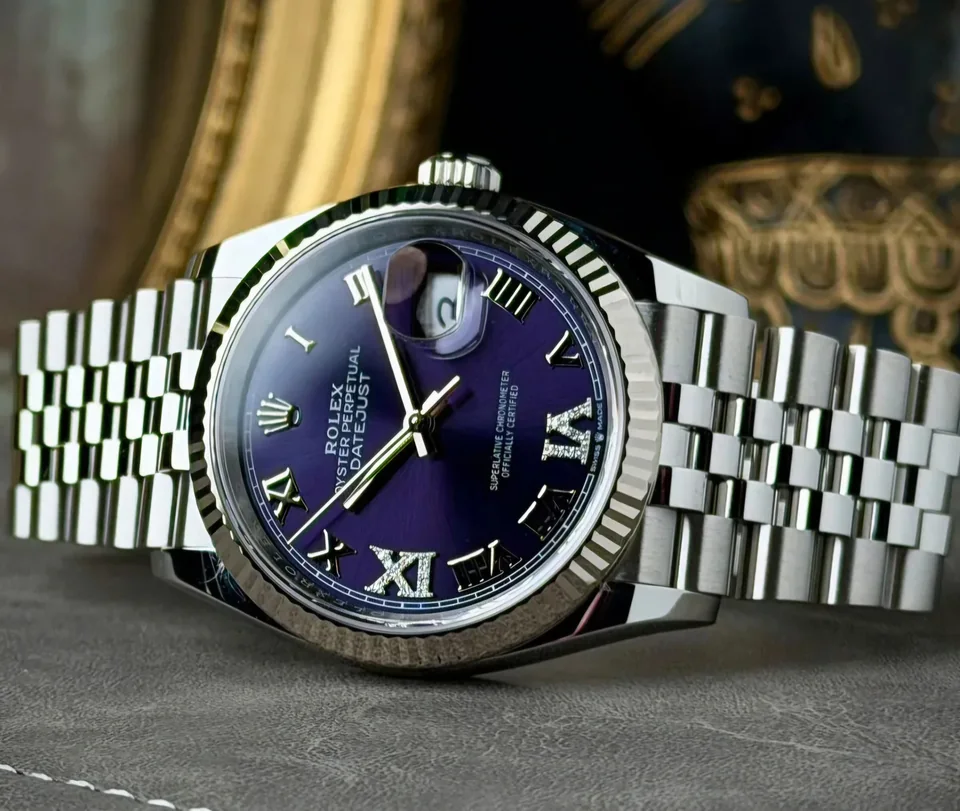
Aubergine Datejust 36 with diamond-set Roman VI and IX. Photo: Ron King / Rallo Watches.
This review concerns the 36 mm Datejust reference 126234 pictured here: Oystersteel case, white-gold fluted bezel, aubergine Roman dial with diamond-set VI and IX, and Jubilee bracelet. Reference 126234 covers multiple dial and bracelet combinations, so buyers should confirm the exact configuration of any individual watch rather than relying on the six-digit case reference alone.
Why the dial works
Rolex describes this dial as aubergine with a sunray finish. The Roman VI and IX are made of 18 kt gold and set with 24 diamonds in total. In person and in photographs, the color changes considerably with the angle and light. Ask for clear, unfiltered dial pictures in daylight and softer indoor light before judging the shade. Check that the printing, hour markers, hands and date aperture are consistent and clean; photos alone are not an authentication method.
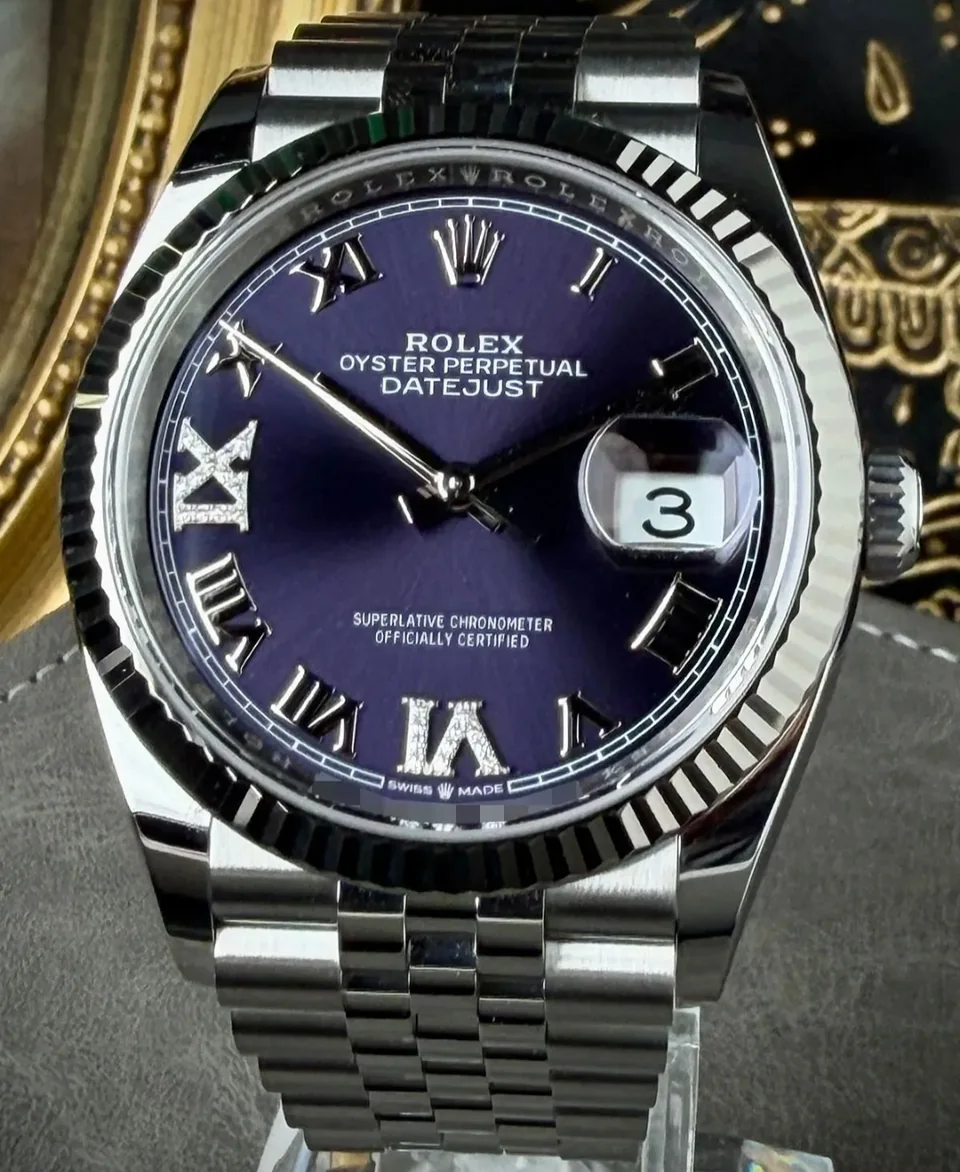
The aubergine sunray dial and diamond-set Roman numerals. Photo: Ron King / Rallo Watches.
The Cyclops lens magnifies the date at three o'clock. It is a practical signature, though the enlarged date and sparkling numerals give this version a visually busy center compared with a plain baton-dial Datejust. That is a matter of taste, and it is worth seeing on the wrist before committing.
Case and bracelet
The 36 mm Oyster case is the part that makes the design flexible. Rolex calls this steel-and-white-gold pairing White Rolesor: the case and Jubilee bracelet are Oystersteel, while the fluted bezel is white gold. The flutes catch light without needing a larger case. The Jubilee's five-piece links bend comfortably around the wrist and bring a softer look than the Oyster bracelet.
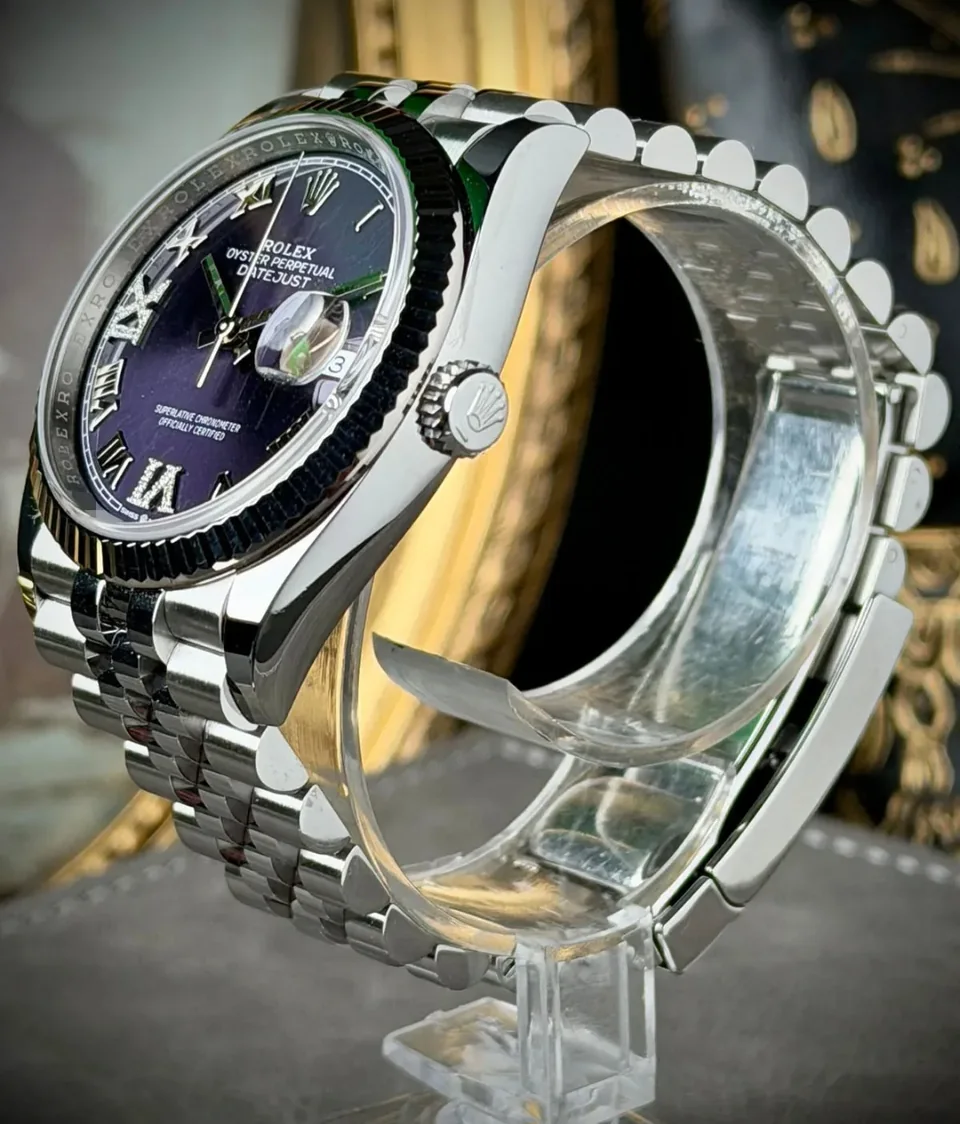
Case, crown and fluted bezel profile. Photo: Ron King / Rallo Watches.
Rolex specifies a folding Oysterclasp with a 5 mm Easylink comfort extension. On a pre-owned example, inspect the clasp action, link edges, bracelet articulation and the fit at both end links. Normal wear is expected; excessive polishing can soften the crisp transitions that make the case and bracelet attractive. Ask whether all removed links accompany the watch, since sizing flexibility matters on a five-link bracelet.
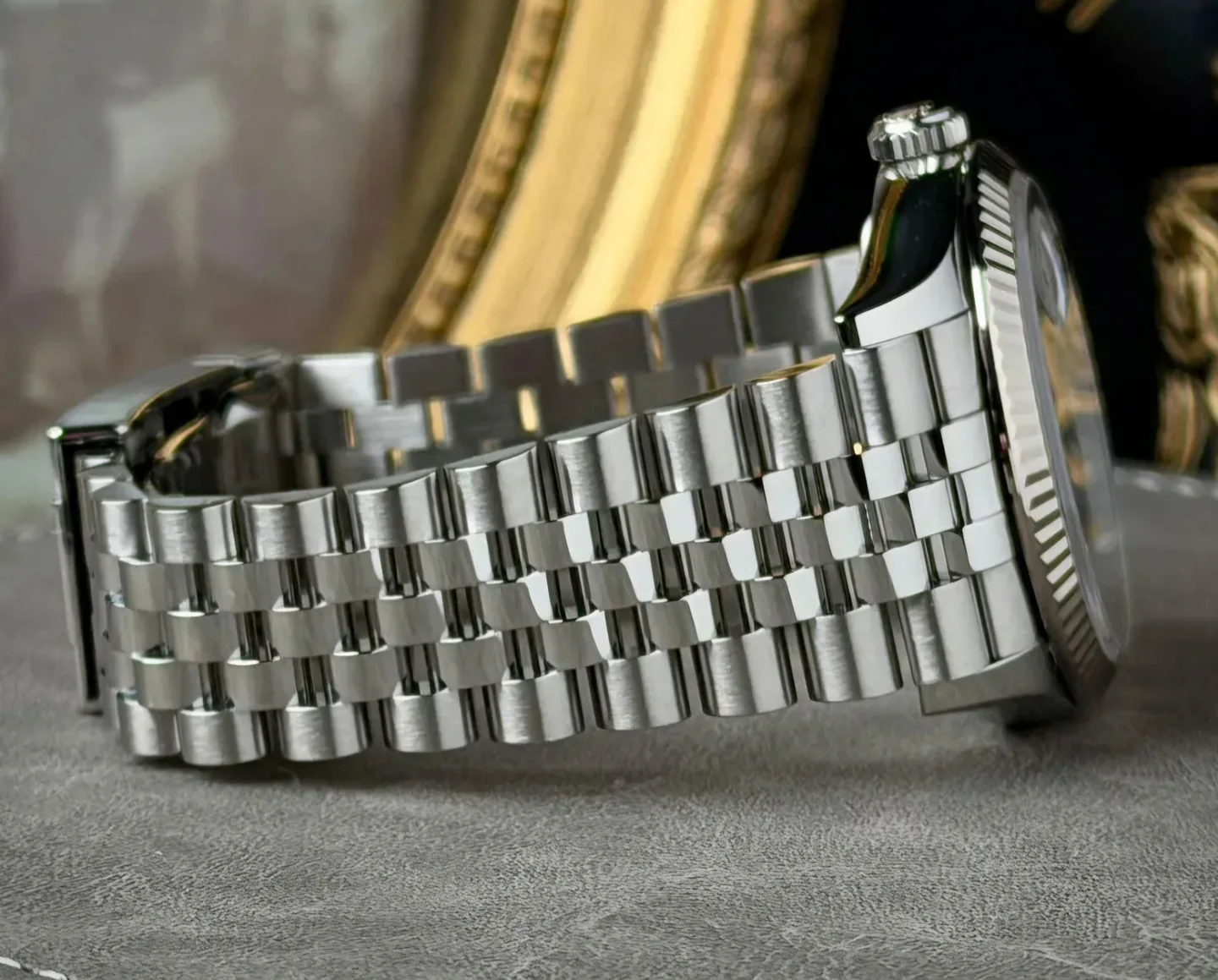
The five-link Jubilee bracelet. Photo: Ron King / Rallo Watches.
Movement and everyday use
Inside is Rolex's self-winding calibre 3235. Rolex quotes approximately 70 hours of power reserve and a precision standard of minus two to plus two seconds per day after casing. The case is rated to 100 meters of water resistance when sound and correctly sealed. Those are model specifications, not a promise about an individual used watch. If water use matters, have its seals and pressure resistance checked by a qualified watchmaker, especially when service history is unclear.
The instant-change date is useful for daily wear. If this would be an occasional watch, the reserve gives roughly a weekend away from the wrist before it needs resetting. The 36 mm case also makes sense for a wider range of wrists than the larger Datejust 41; measure your own preference rather than treating either size as universal.
What to check before buying
Start with the dial and papers. This aubergine Roman dial is a defining feature, and reference 126234 exists in many configurations. Confirm that the physical watch, warranty documentation and seller description agree about the dial, bracelet, bezel and approximate production period. The card shown with the photographed example supports the stated base reference, but photographs of accessories are not proof that a particular watch is genuine or that every part is original.
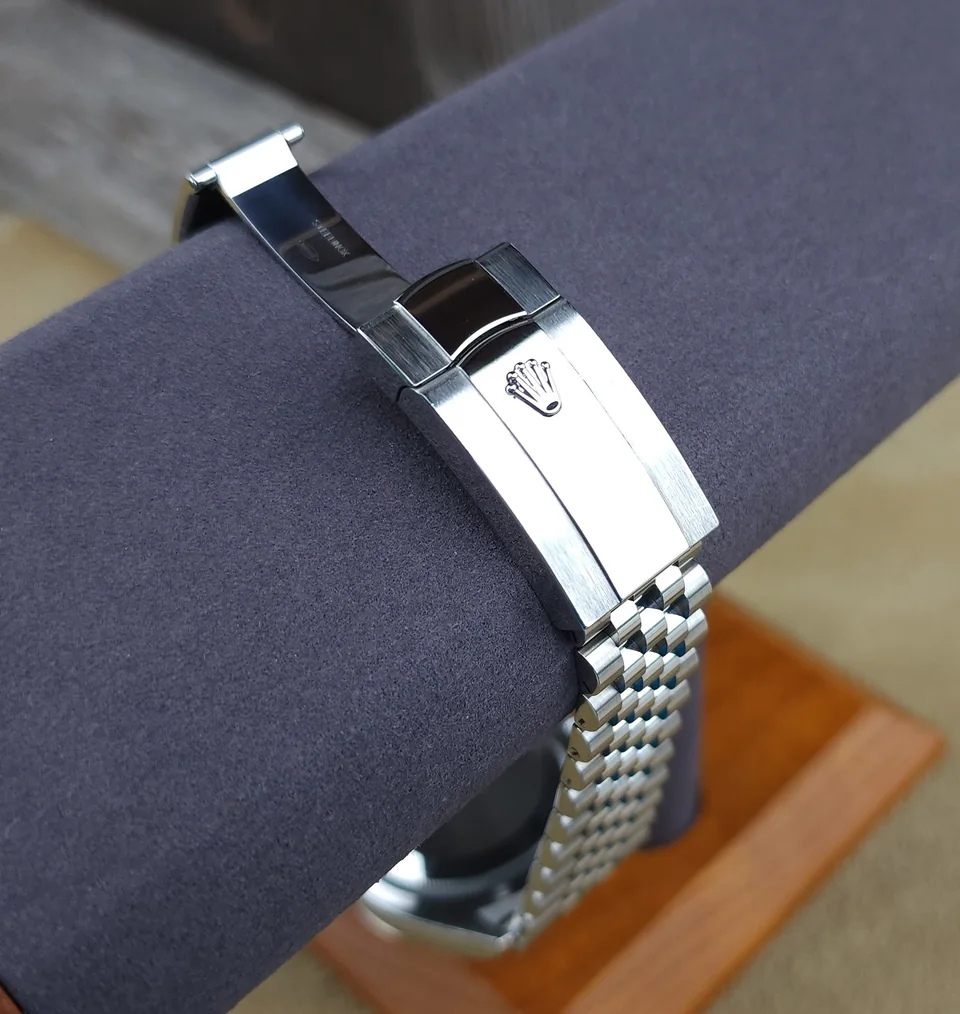
Oysterclasp exterior and coronet. Photo: Ron King / Rallo Watches.
Next, inspect the case profile and bracelet. Request sharp pictures of the dial, both case sides, clasp, bracelet and end links. Examine the fluted bezel for dents and the crystal for chips. A seller should disclose service work, replacement parts and polishing. For an expensive pre-owned purchase, obtain an independent in-person assessment or use an official Rolex service channel when possible.
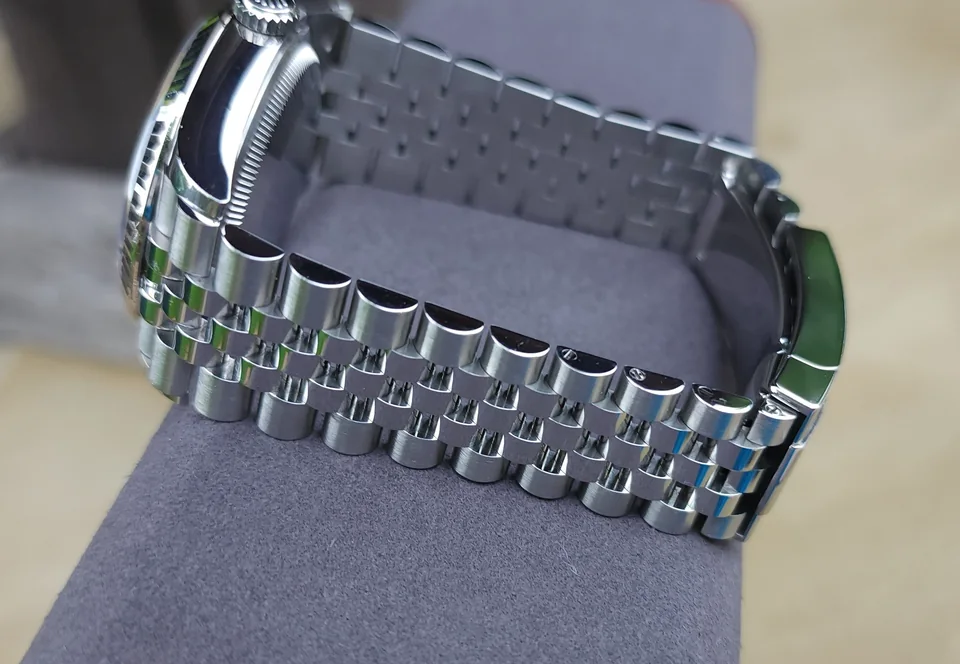
Clasp and bracelet underside. Photo: Ron King / Rallo Watches.
This Datejust succeeds because its expressive dial sits in a familiar, wearable package. Buy it for the purple sunray finish and the diamond Roman numerals, then judge the particular watch on condition, documentation and the integrity of its steel-and-gold details.
Sources and photo credits
Specifications checked October 6, 2026 against Rolex's Datejust 36 reference 126234 aubergine dial product page: https://www.rolex.com/en-us/watches/datejust/m126234-0063
Datejust background: https://www.rolex.com/en-us/watches/datejust/features
All six original photographs: Ron King / Rallo Watches, from Ron's watch archive and used with his authorization. The Rolex product page verifies model specifications; it is not the source of these photographs.