Rolex Reviews · October 12, 2026
Rolex GMT-Master II 126720VTNR Review: The Left-Handed Traveller
A buyer-focused review of the Rolex GMT-Master II 126720VTNR on Jubilee bracelet, with exact-watch owner photos, specifications and condition checks.
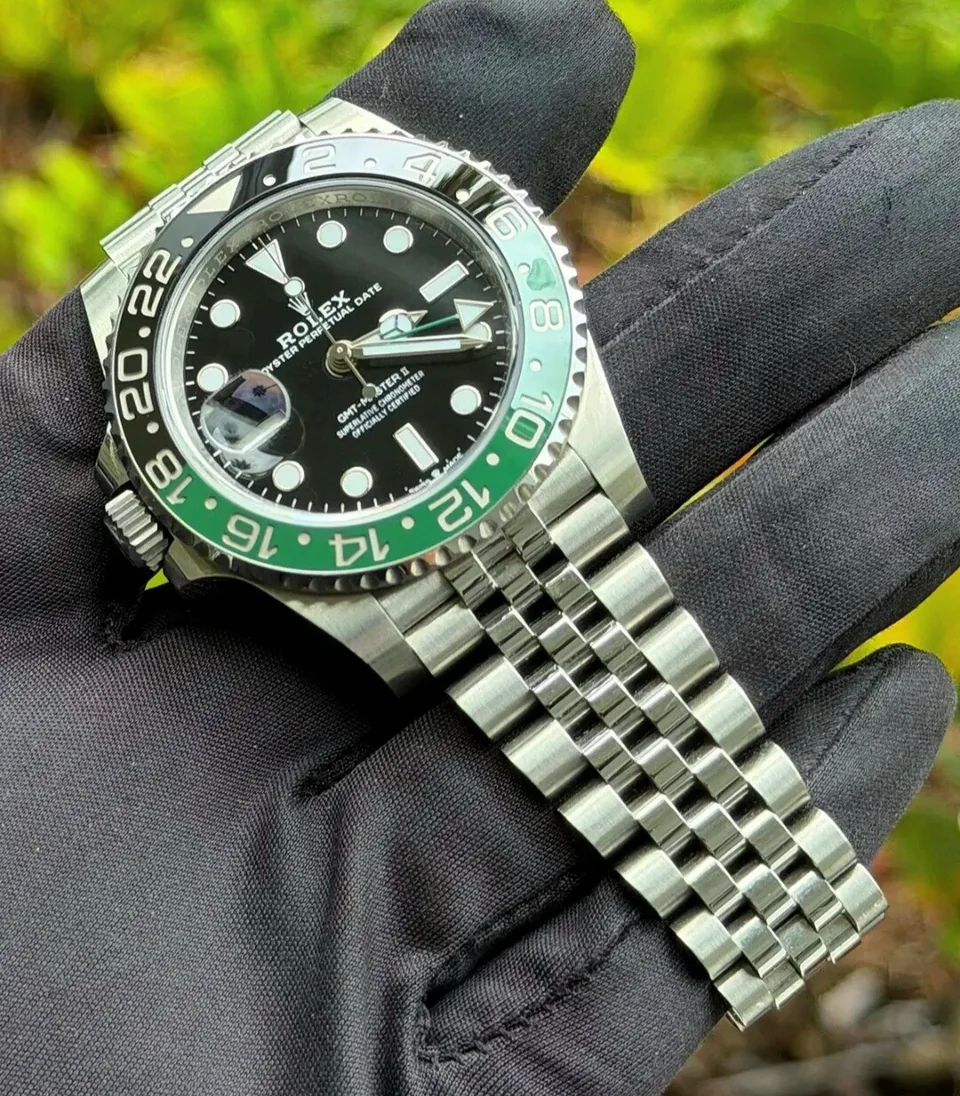
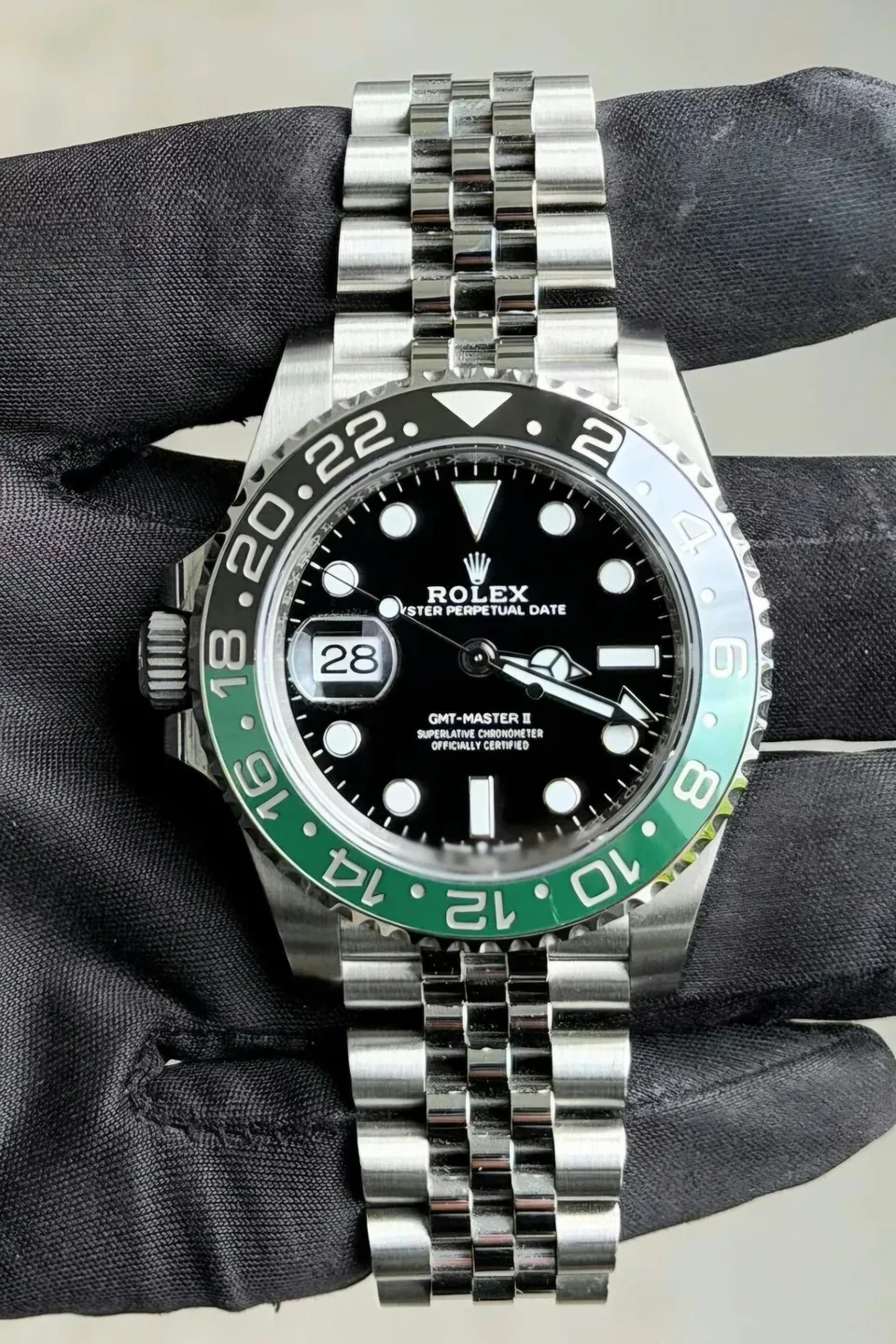
The Rolex GMT-Master II reference 126720VTNR is not a familiar GMT-Master II with its components rearranged for novelty. Its winding crown and crown guard sit on the left side of the case, while the date aperture and Cyclops lens move to 9 o’clock. The green-and-black 24-hour bezel gives the watch an immediate visual identity, but the more important buying questions concern the exact bracelet configuration, case geometry, bezel, crown operation, movement behavior and documentation.
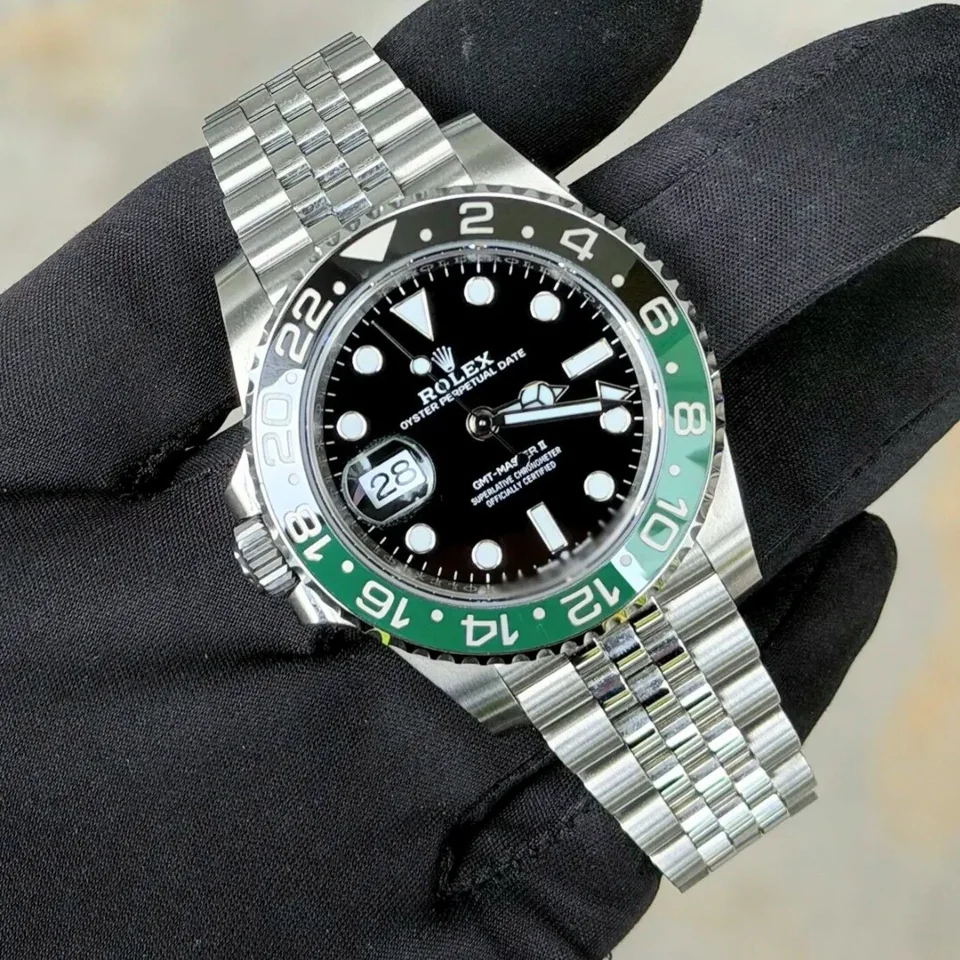
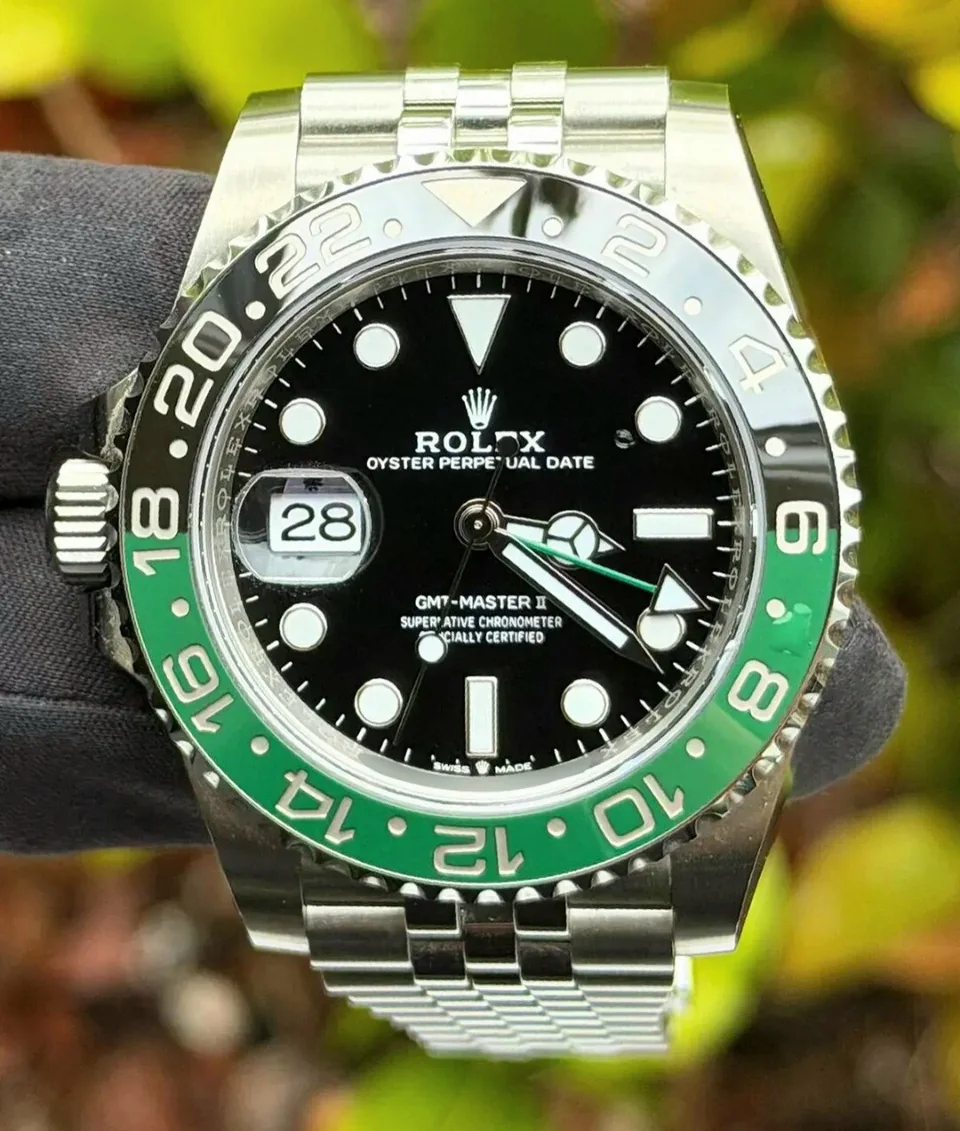
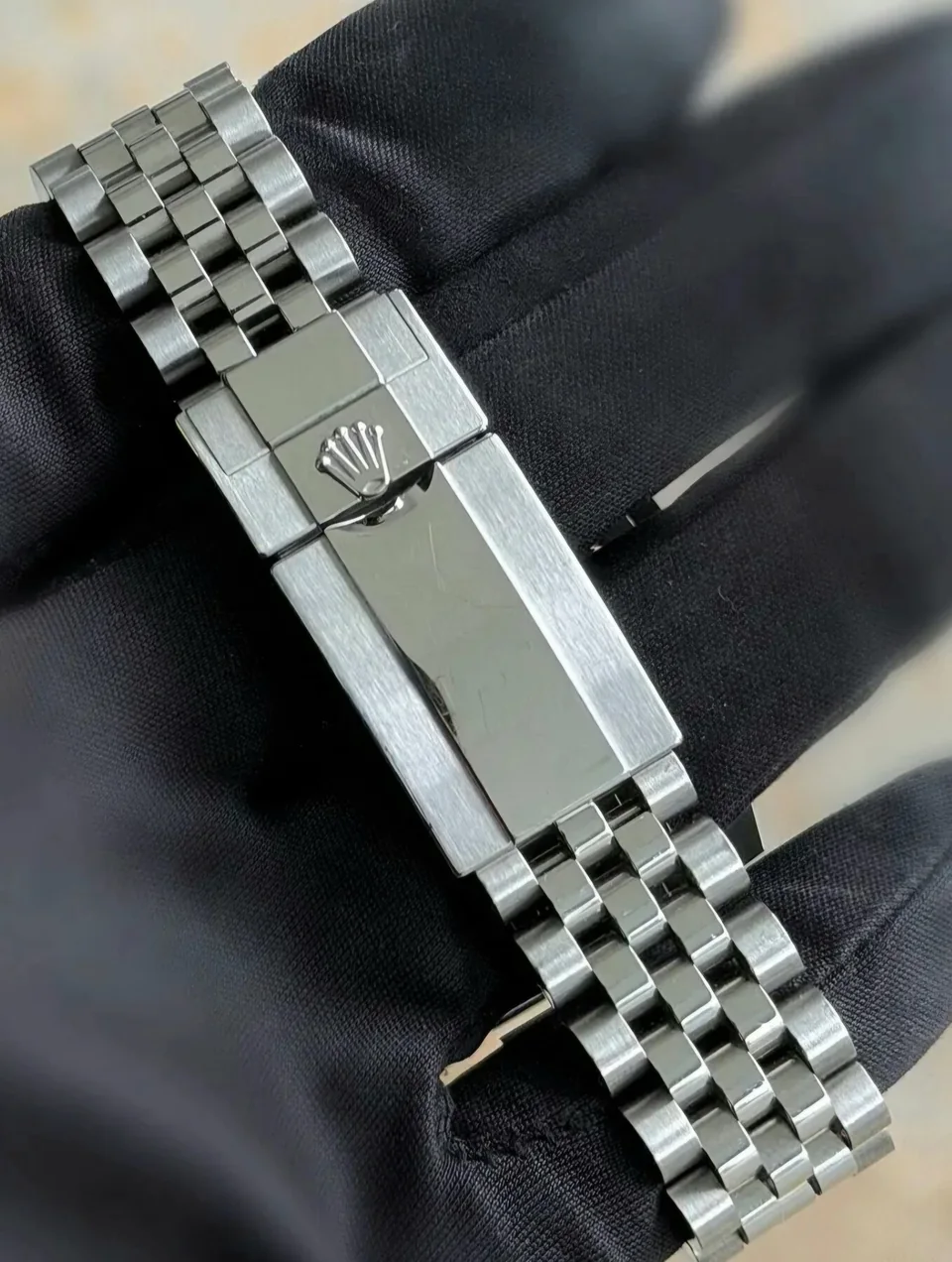
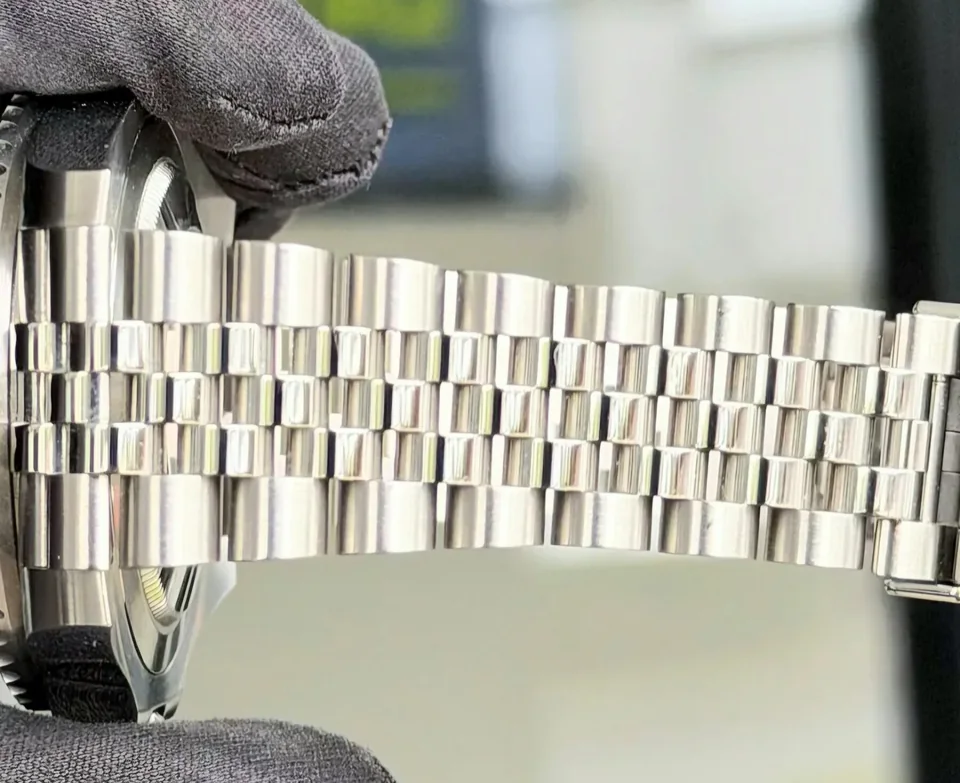
The watch photographed here is the Oystersteel 126720VTNR on the five-piece-link Jubilee bracelet, the configuration Rolex identifies as m126720vtnr-0002. All six photographs show this exact watch: an oblique lead view, a full frontal view, a second angled view, a dial-and-bezel macro, the Oysterlock clasp and the Jubilee bracelet from the underside.
This is an editorial review, not a sale listing or a substitute for authentication. Any buyer should reconcile the physical watch, reference, bracelet, papers and service history through a qualified inspection.
Why the 126720VTNR matters
Rolex introduced the green-and-black Cerachrom version in 2022. The brand’s own model history describes it as the first Oystersteel GMT-Master II to place the winding crown on the left side and the date at 9 o’clock. That reversal changes the visual balance more than photographs suggest. The Cyclops lens now anchors the left half of the dial, and the crown is less visually prominent when the watch is viewed straight on.
The case remains a 40 mm Oystersteel Oyster case. Rolex specifies 100 metres of water resistance, a screw-down Triplock crown, a sapphire crystal and a bidirectional 24-hour bezel with a two-colour ceramic insert. Those are factory specifications for the reference, not a permanent guarantee for every pre-owned example.
The green lower half of the bezel is reserved by Rolex for this version. It works with the green 24-hour hand without making the dial feel colorful in the conventional sense. Most of the watch is still black, white and steel. The color becomes strongest at an angle, as the owner photographs show.
The Jubilee configuration is specific
Reference 126720VTNR has been offered on both Oyster and Jubilee bracelets. The photographs in this review show the Jubilee version, m126720vtnr-0002. Rolex describes the bracelet as a five-piece-link design fitted with an Oysterlock folding safety clasp and the Easylink extension, which adds about 5 mm of adjustment.
That distinction belongs in the buying record. “126720VTNR” identifies the watch reference, but the full configuration should also match the bracelet, clasp and warranty documentation. A seller should not describe an Oyster-bracelet watch with Jubilee specifications or treat a later bracelet swap as original delivery without evidence.
The Jubilee’s alternating polished and brushed surfaces make condition easy to misread. A bright studio image may emphasize the polished center links while hiding marks on the clasp or outer links. The underside and clasp views in this set are therefore as useful as the dial photographs.
Inspect:
- the fit of the end links to the case;
- articulation across each five-piece link;
- screw heads and evidence of careless sizing;
- the Oysterlock safety mechanism;
- the Easylink extension and its positive engagement;
- brushing on the outer links and clasp; and
- symmetry of polished surfaces after any refinishing.
The photographed clasp shows normal contact marks. That is not a condition grade, but it is more informative than a retouched product-card image.
Calibre 3285 and the practical GMT display
Rolex equips the 126720VTNR with calibre 3285. The company specifies automatic winding, an approximately 70-hour power reserve and precision of −2/+2 seconds per day after casing. The movement displays local hours, minutes and seconds, a 24-hour reference time, and an instantaneous date.
The useful travel feature is the independently adjustable local-hour hand. Rolex’s GMT-Master II guide explains that reference time is set with the 24-hour hand and minute hand, while local time is then moved in one-hour jumps. That lets a traveller change local time without stopping the movement or disturbing the minute setting. The date follows local time.
A pre-owned inspection should test the function rather than repeat the specification. Wind the watch correctly, set a known reference time, move the local-hour hand through midnight in both directions and confirm that the date changes as expected. Check that the crown engages each setting position cleanly and screws down without resistance or cross-threading.
The left-side crown may feel unfamiliar to a right-handed owner, but unfamiliar is not defective. What matters is consistent mechanical behavior.
Read the bezel and dial carefully
The green-and-black Cerachrom insert is central to this reference. The molded numerals and graduations are coated with platinum by PVD, according to Rolex. Under magnification, examine the insert for chips, impact marks and inconsistent fill. Rotate the bezel through a complete cycle and check alignment at 12.
The black dial uses Rolex’s Chromalight display, with luminous circles, rectangles and a triangle for quick reading. On this reference, the 24-hour hand and the GMT-Master II inscription provide green accents. Inspect the dial and hands for marks, corrosion or evidence of removal. Compare lume color and brightness across the hour markers, hands and 24-hour pointer.
The macro photograph reveals a practical point: reflections from the sapphire crystal and Cyclops can exaggerate or hide details depending on the angle. Ask for sharp images under neutral light, not only saturated outdoor shots.
Case geometry before cosmetic perfection
Polishing can make a watch look cleaner while reducing the lines that give the case its character. On the 126720VTNR, inspect the lugs, crown-guard profile, transition between brushed and polished surfaces, and the relationship between case, bezel and end links.
A qualified examiner should also look for impact evidence around the bezel and crown. The unusual crown position does not change the basic rule: crown threads, seals and case components need to be evaluated on the individual watch.
Rolex’s current service description says that a complete intervention separates the movement, case and bracelet; disassembles and examines the movement; cleans and lubricates components; replaces seals; checks precision; and pressure-tests the case. Refinishing is performed on request. A service invoice is most useful when it states what was actually done and which parts were replaced.
Water resistance is a current test result
Rolex rates the model to 100 metres and instructs owners to screw the crown down fully to maintain the case seal. For a pre-owned example, do not treat the original rating as proof of present water resistance. Age, opening the case, impacts and deteriorated seals can change the result.
Before swimming or cleaning the watch under water, obtain a recent pressure test from a qualified watchmaker. If the test fails, resolve the cause rather than relying on the reference’s factory specification.
Paperwork, privacy and provenance
The warranty card and other documents should agree with the reference and bracelet configuration. Confirm the purchase date, reference and seller history privately. Do not publish or circulate unredacted serial numbers merely to make a listing appear complete.
Accessories are evidence only when they can be tied to the watch. A correct box, booklet and card do not establish case condition, movement health or component originality by themselves. Ask whether the dial, hands, bezel, crown and bracelet were delivered with the watch or replaced during service.
For a broader comparison, the Rolex GMT-Master II 116710BLNR review shows how an earlier steel GMT-Master II handles its blue-and-black bezel and Oyster bracelet. The Rolex Daytona 116523 review applies the same condition-first method to another modern Rolex. Rallo’s buyer information guide explains the inspection approach used across these reviews.
What to verify before buying
- Does the watch and its documentation identify reference 126720VTNR?
- Is this the Jubilee configuration m126720vtnr-0002, and is the bracelet original to the delivered watch?
- Do the green-and-black bezel insert, left-side crown and 9 o’clock date match the reference?
- Does the bezel rotate correctly and align at 12?
- Does the local-hour hand jump cleanly in both directions, with the date following local time?
- Does calibre 3285 meet reasonable timing and power-reserve expectations on the individual watch?
- Are the case edges, crown guards and bracelet surfaces still well defined?
- Do the crown, Triplock threads, Oysterlock clasp and Easylink extension operate properly?
- What service was performed, by whom and with which replacement parts?
- Has the watch passed a recent water-resistance test?
These questions matter more than the “Sprite” nickname. Nicknames are convenient search terms; they do not identify the delivered configuration or condition.
Verdict
The 126720VTNR succeeds because its changes are functional as well as visual. The green-and-black bezel supports the 24-hour display, the local-hour hand remains a genuinely useful travel complication, and the left-side crown with 9 o’clock date gives the watch a character unlike any other current steel GMT-Master II.
The Jubilee version adds comfort and a dressier surface pattern, but it also makes bracelet and clasp condition especially important. Buy the exact watch, not the nickname: verify m126720vtnr-0002, inspect the case and bezel, test every GMT function, reconcile the paperwork and insist on a current mechanical and water-resistance picture.
Primary sources checked October 12, 2026
Photography and rights
All six photographs are original images from Ron King’s Rallo Watches owner archive and show this exact 126720VTNR on its Jubilee bracelet. Commercial publication by Rallo is authorized. The published set excludes the warranty-card overview containing identifying information. No manufacturer photography, stock imagery, AI-generated imagery or merely similar reference was used.